
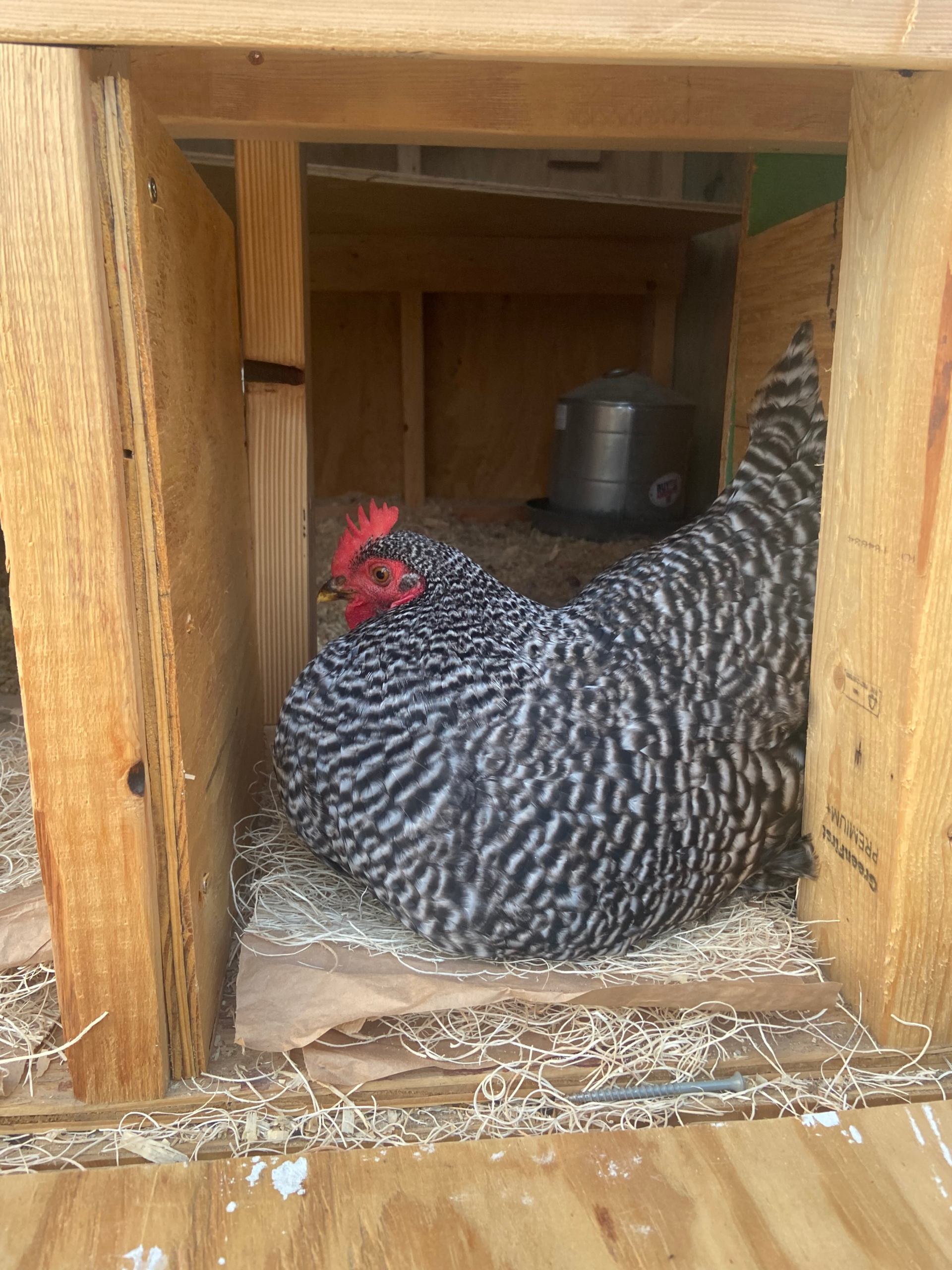
Not all breeds go broody, but some are famous for it (looking at you, Silkies and Cochins!). Here are the main triggers:
- Hormones & Season – Longer daylight and warmer weather can set off the instinct.
- Breed Traits – Some breeds have been selected for broodiness, while others (like most high-production egg layers) rarely go broody.
- Egg Pile-Up – A full nest box can encourage a hen to “claim” it and start sitting.
Should You Let a Hen Go Broody?
It depends on your goals.
✅ Let her go broody if:
- You want to hatch chicks naturally.
- You have fertile eggs and a safe setup.
- You don’t mind her taking a break from laying for a while.
❌ Break her broodiness if:
- You don’t want more chicks.
- You rely on her egg production.
- She’s stubbornly sitting on nothing (it happens!).
How to Manage a Broody Hen
Here are your two main options:
1. Support Her Broodiness
- Provide fertile eggs – Slip them under her within the first day or two.
- Separate space – Move her to a safe broody coop or a quiet corner with food and water.
- Check for pests – Sitting hens are magnets for mites and lice, so keep the area clean.
- Mark the calendar – Chicken eggs take about 21 days to hatch.
👉 If you don’t have your own fertile eggs, many hatcheries ship them. (Affiliate opportunity: link to a trusted hatchery or fertile egg supplier.)
2. Break Her Broodiness
If you don’t want her sitting, you’ll need to interrupt the hormone cycle. Some methods include:
- Cool her down – Place her in a wire-bottom cage off the ground for a few days with food and water (air circulation helps reduce the broody hormones).
- Remove eggs daily – Don’t let a clutch build up.
- Block the nest box – Temporarily close it off when others aren’t laying.
- Persistent approach – Some hens take a week or more before giving up.
👉 Broody breaker cages are simple DIY setups, but you can also buy ready-made wire-bottom pens. (Affiliate opportunity: link to poultry supplies.)
Final Thoughts
A broody hen can be either a blessing or a headache, depending on your plans. If you want chicks, she’ll happily do the work of an incubator. If not, you’ll need to step in and break the cycle.
Either way, understanding broodiness helps you keep your flock healthy, productive, and stress-free.