
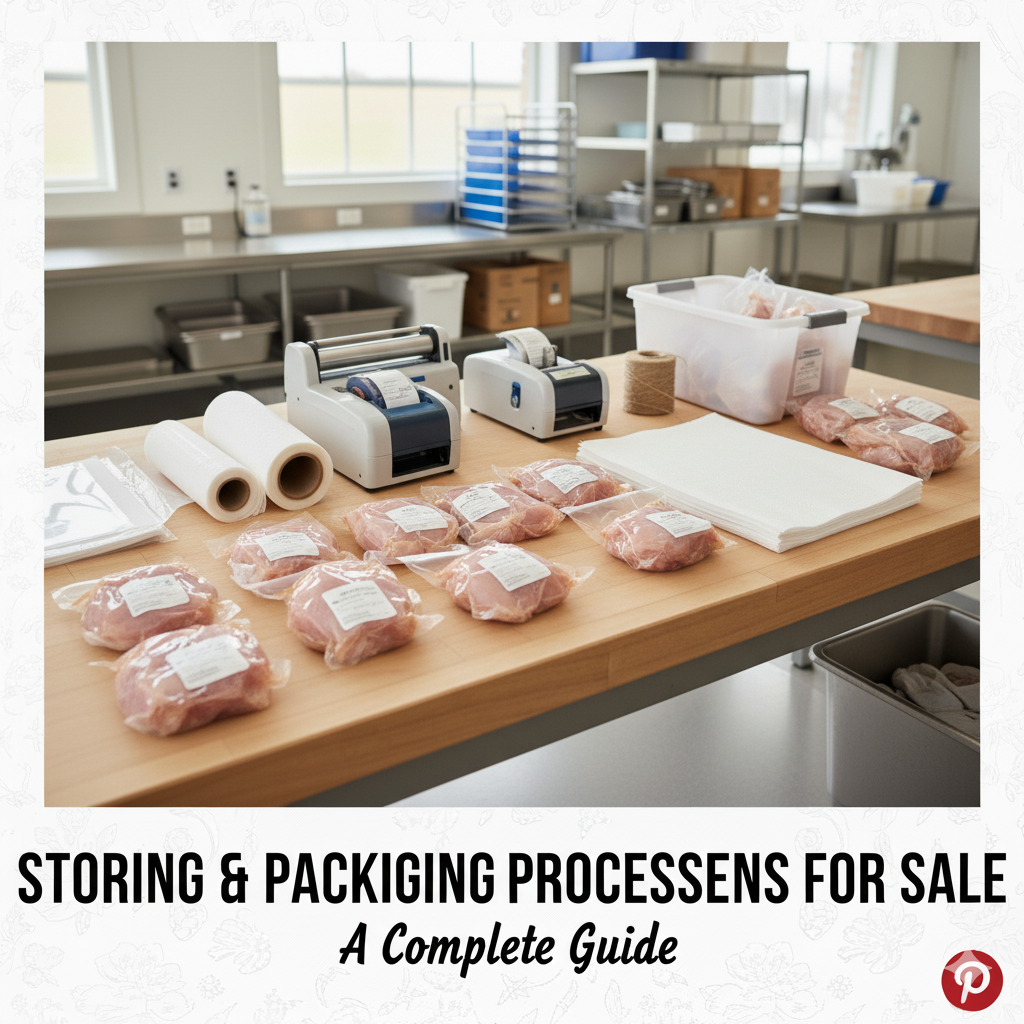
Raising and processing your own chickens is only part of the journey. If you plan to sell poultry—or even just stock your freezer—proper storage and packaging are critical for food safety, meat quality, and customer trust. This guide walks through everything you need to know about keeping meat birds fresh, packaging options, and labeling for resale.
Why Storage & Packaging Matters
- Food Safety: Poultry must be chilled quickly to prevent bacterial growth.
- Quality: Proper storage prevents freezer burn and preserves flavor.
- Professionalism: Customers judge your product by how it looks in the package.
- Compliance: State laws require specific labeling and handling practices.
Chilling Meat Birds After Processing
Immediately after processing, poultry must be cooled to safe temperatures.
Ice Bath Cooling
- Submerge birds in an ice water bath (32–40°F) for 30–60 minutes.
- Use a clean cooler or stainless tub.
- Ratio: 1 lb of ice per bird.
Air Chilling
- Hang or lay birds in a cold, clean environment (36–40°F).
- Common in Europe; yields firmer skin and slightly different flavor.
- Slower than ice bath and requires walk-in cooler space.
👉 In Michigan (and most states), poultry must be cooled to below 41°F within 4 hours of slaughter.
Freezer Storage Best Practices
- Temperature: Keep freezers at 0°F or lower.
- Organization: Rotate stock “first in, first out.”
- Duration:
- Vacuum sealed: 12+ months.
- Shrink bags: 9–12 months.
- Freezer paper/zip bags: 3–6 months.
👉 Tip: Invest in a digital thermometer to monitor freezer temps consistently.
Packaging Options
1. Shrink Bags
- Cost: $0.50–$1 per bag.
- How it works: Place bird in bag, dip in hot water (~185°F), and the plastic shrinks tight.
- Pros: Inexpensive, professional look, freezer-safe.
- Cons: Limited oxygen barrier compared to vacuum sealing.
2. Vacuum Sealing
- Cost: $150–$300 for a vacuum sealer, $0.25–$0.50 per bag.
- Pros: Longest freezer life, premium appearance, best for cuts.
- Cons: More upfront cost, slower for large batches.
3. Freezer Paper or Zip-Top Bags
- Cheapest method.
- Fine for short-term family use.
- Not recommended for resale—looks unprofessional and leads to faster freezer burn.
Labeling Requirements for Sale
Even under exemptions (like Michigan’s 1,000 bird rule), poultry sold must include labels with:
- Farm name and address.
- Net weight of the package.
- Exemption statement (e.g., “Exempt P.L. 90-492”).
- Safe handling instructions (with USDA food safety graphic).
👉 Pre-printed safe handling labels are inexpensive and add professionalism.
Whole Birds vs. Cuts
- Whole Birds: Fastest to process, easiest to package (shrink bags).
- Cuts (breasts, thighs, wings, drumsticks): More labor, but higher value per lb.
- Organs (heart, liver, gizzard): Can be packaged separately—popular with some buyers.
👉 Pro Tip: If selling at farmers markets, offering both whole birds and a few cut-up packs gives customers choice.
Storage Capacity Planning
Estimate freezer space before processing:
- Whole dressed chicken (4–5 lbs) = ~0.25 cubic feet of freezer space.
- 50 birds = ~12–13 cubic feet.
- Chest freezers:
- Small (7 cu ft) = 25–30 chickens.
- Medium (14 cu ft) = 50–60 chickens.
- Large (21 cu ft) = 80–100 chickens.
👉 Always size up—you’ll use the extra space.
Tips for Farmers Market Sales
- Transport birds in coolers with ice packs.
- Keep meat at 32–40°F during market hours.
- Use a digital probe thermometer for spot checks.
- Display product in coolers or small freezers—presentation matters.
- Bring signage showing processing date, farm name, and prices.
Common Mistakes to Avoid
- Insufficient chilling: Can lead to spoilage or unsafe meat.
- Improper packaging: Freezer burn turns off buyers quickly.
- No labeling: Non-compliant and unprofessional.
- Overfilling freezers: Reduces airflow, causing uneven freezing.
Final Thoughts
Storing and packaging meat birds properly is just as important as raising and processing them. Whether you’re keeping a year’s worth of chicken for your family or selling at a Michigan farmers market, professional storage and packaging give your product a longer shelf life, better flavor, and more customer trust.
Invest in shrink bags or a vacuum sealer, follow safe chilling practices, and always label your birds correctly—you’ll stand out as a serious, trustworthy producer.
For more on this refer to The ultimate guide to processing meat birds.