
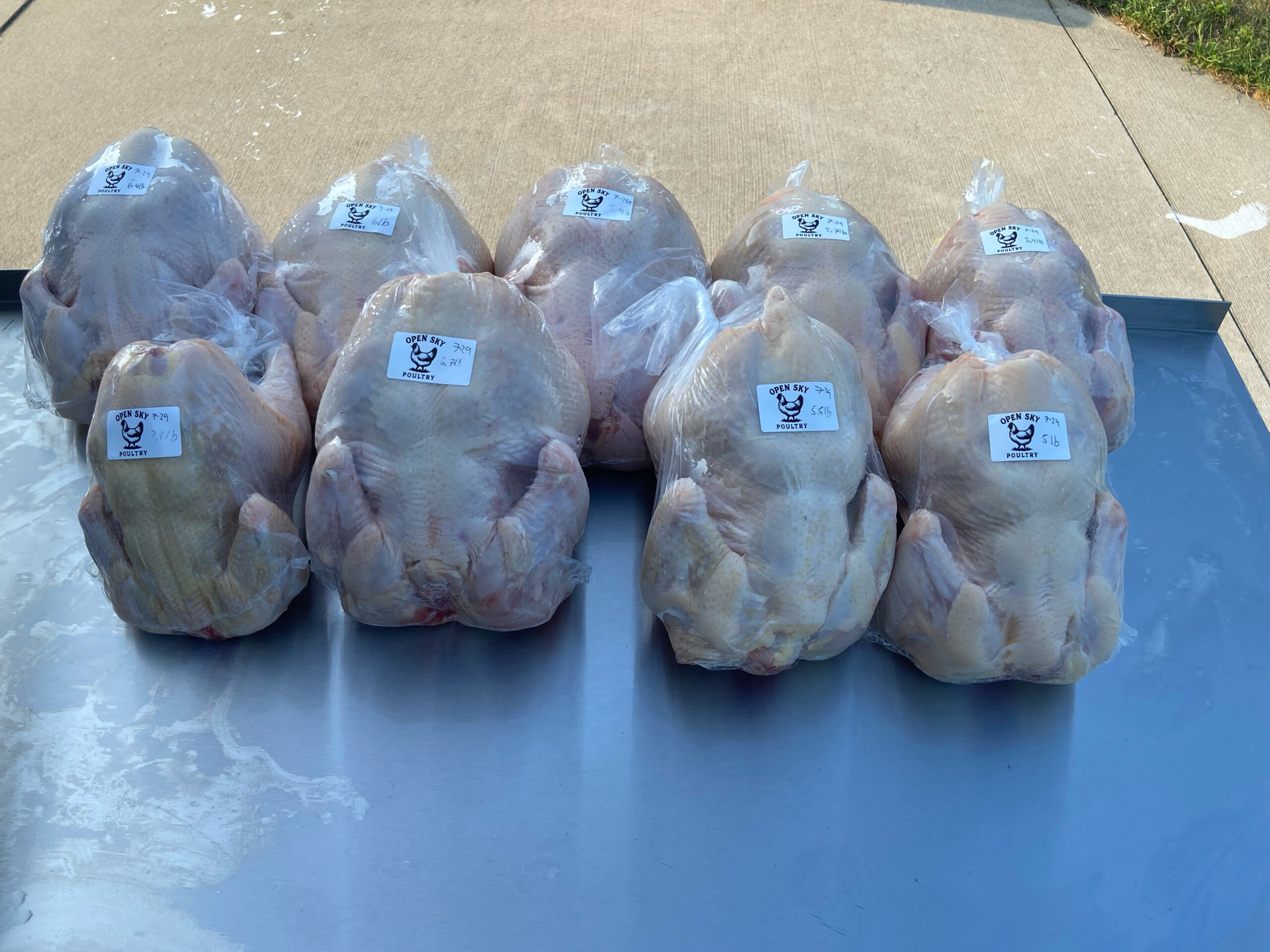
Raising your own chickens for meat is rewarding, but the final step — processing — can feel overwhelming for new homesteaders. This ultimate guide walks you through everything you need to know about processing meat birds at home or through a processor, from preparation to packaging, so you can put wholesome, home-raised chicken on the table with confidence.
This post contains affiliate links which may allow for commissions at no extra cost to you.
Why Processing Meat Birds Matters
Processing is more than just butchering — it’s about honoring the bird, maximizing yield, and ensuring safe, high-quality meat. Done right, it allows you to:
- Save money compared to buying pasture-raised chicken at the store.
- Ensure humane treatment and a stress-free end for your birds.
- Control cleanliness and food safety.
- Create a freezer-ready product your family will enjoy for months.
Whether you’re processing 5 birds or 50, a good system makes all the difference.
Preparing for Processing Day
Preparation sets you up for success:
- Withhold Feed (12–18 Hours Beforehand)
- Remove feed the night before so the digestive tract is clear.
- Continue providing water — hydration keeps birds calm.
- Set Up Your Workstation
- A kill cone for humane dispatch.
- Scalder with water heated to ~145–150°F.
- Plucker (or plan to hand-pluck).
- Sharp knives (a boning knife and skinning knife).
- Ice water bath for immediate cooling.
- Clean Surfaces & Tools
- Sanitize tables, buckets, and knives.
- Have separate bins for feathers, guts, and usable parts.
The Processing Steps
Here’s a clear walkthrough of the main stages:
1. Dispatching the Bird
- Place the chicken head-first into the kill cone.
- Use a sharp knife to quickly cut the carotid arteries/jugular veins.
- Allow thorough bleeding (30–60 seconds).
2. Scalding
- Dunk the bird in hot water (145–150°F) for 30–60 seconds.
- Test feathers: if they pull easily, you’re ready.
3. Plucking
- Mechanical pluckers save huge amounts of time (great for 10+ birds).
- For small batches, hand-plucking works fine.
- Remove pinfeathers with a knife or tweezers.
4. Evisceration (Removing Organs)
- Make a careful incision near the vent.
- Remove intestines, liver, heart, gizzard — save usable organs if desired.
- Be gentle around the gallbladder (tiny green sac on liver) to avoid bitterness.
5. Final Cleaning
- Rinse thoroughly in cold water.
- Inspect for leftover lungs, windpipe, or pinfeathers.
- Chill immediately in an ice bath (4-8 hours).
- Can remain in Ice bath for 24-48 hours if desired
Packaging & Storage
How you package meat affects shelf life and taste:
- Bagged Whole Birds: Heat-shrink poultry bags are popular and freezer-safe.
- Cut Parts: Portion out breasts, thighs, wings, and drumsticks for flexibility.
- Vacuum Sealing: Best long-term storage option (up to 12 months).
- Freezer Paper/Zip Bags: Fine for short-term use (3–6 months).
Always label with date and weight. Rotate stock using the “first in, first out” method.
Regulations & Selling Meat
If you plan to sell chicken:
- U.S. law allows 1,000 birds/year processed on-farm without USDA inspection (check state rules).
- For larger operations, USDA or state-inspected facilities are required.
- Farmers markets and local buyers often appreciate knowing your processing method.
Tips for Efficiency
- Work in teams: one person dispatches, one scalds/plucks, one eviscerates.
- Keep multiple knives sharpened and rotate them.
- Process in the early morning when it’s cool.
- Plan for breaks — processing is physical work.
Frequently Asked Questions
How long does it take to process a chicken?
- A beginner may take 20–30 minutes per bird. With practice + equipment, you can get it down to 5–7 minutes.
What’s the best age to process meat birds?
- Cornish Cross: 7–9 weeks (4–6 lbs dressed).
- Heritage breeds: 16–20 weeks.
Do I have to pluck, or can I skin the bird?
- You can skin instead of plucking — faster, but you lose the skin (and flavor).
Final Thoughts
Processing meat birds can feel intimidating at first, but with preparation, the right tools, and a clear system, it becomes a smooth and efficient part of raising poultry. Every batch will build your confidence and skill.
By doing your own processing, you close the loop on food production — raising, caring for, and providing wholesome meat from start to finish. That’s the heart of self-sufficiency and the homesteading lifestyle.